


What Is Smart Kitchen Sink Faucet?
Smart kitchen sink faucets are automatic faucets with electronic sensors. These sensors turn the flow of water on (and off) when they detect movement, so you don't have to turn the faucet knob.
Advantages of Smart Kitchen Sink Faucet
1. Enhanced Hygiene
Traditional faucets often face issues such as cross-contamination and dirt accumulation, but smart kitchen sink faucets effectively eliminate these concerns.
● Minimizes Cross-Contamination:
Cross-contamination is a major issue with traditional faucets, as users must touch the handle, transferring bacteria from their hands to the faucet. Smart kitchen sink faucets feature motion sensors that activate water flow without requiring physical contact. This reduces the spread of bacteria, keeping the kitchen cleaner and safer.
● Easy to Clean:
Smart kitchen sink faucets have a smooth, sleek surface that is easy to clean and resistant to dirt buildup. In contrast, traditional faucets often have textured surfaces and multiple handles that can trap dirt. This not only enhances functionality but also adds to the faucet's aesthetic appeal. A simple wipe is enough to keep it clean and hygienic.
2. Greater Convenience
Smart kitchen sink faucets save time and increase convenience in the kitchen, making everyday tasks more efficient.
● Hands-Free Operation:
One of the biggest advantages of smart kitchen sink faucets is their touch-free operation. A simple wave of the hand or motion detection turns the water on and off, eliminating the need to touch handles. This is especially useful when hands are dirty or occupied, such as while preparing food or washing dishes. By eliminating the need for knobs or levers, these faucets reduce both time and physical effort in the kitchen.
● Water Conservation:
Designed with efficiency in mind, smart kitchen sink faucets help conserve water. They come with adjustable settings for flow rate and temperature, and their automatic shut-off feature ensures water is used only when necessary. This not only minimizes waste but also reduces utility bills, making them both environmentally friendly and cost-effective.
3. Modern Aesthetics
Smart kitchen sink faucets feature a sleek, contemporary design that enhances the kitchen's overall look while seamlessly integrating with various interior styles.
● Stylish Design:
With their clean lines and modern finishes, smart kitchen sink faucets bring a touch of elegance to any kitchen. Their minimalist aesthetic complements both traditional and contemporary setups, effortlessly blending into different design schemes. Whether paired with a standard countertop sink or a modern wall-mounted basin, these faucets elevate the space's visual appeal.
● Smart Technology Integration:
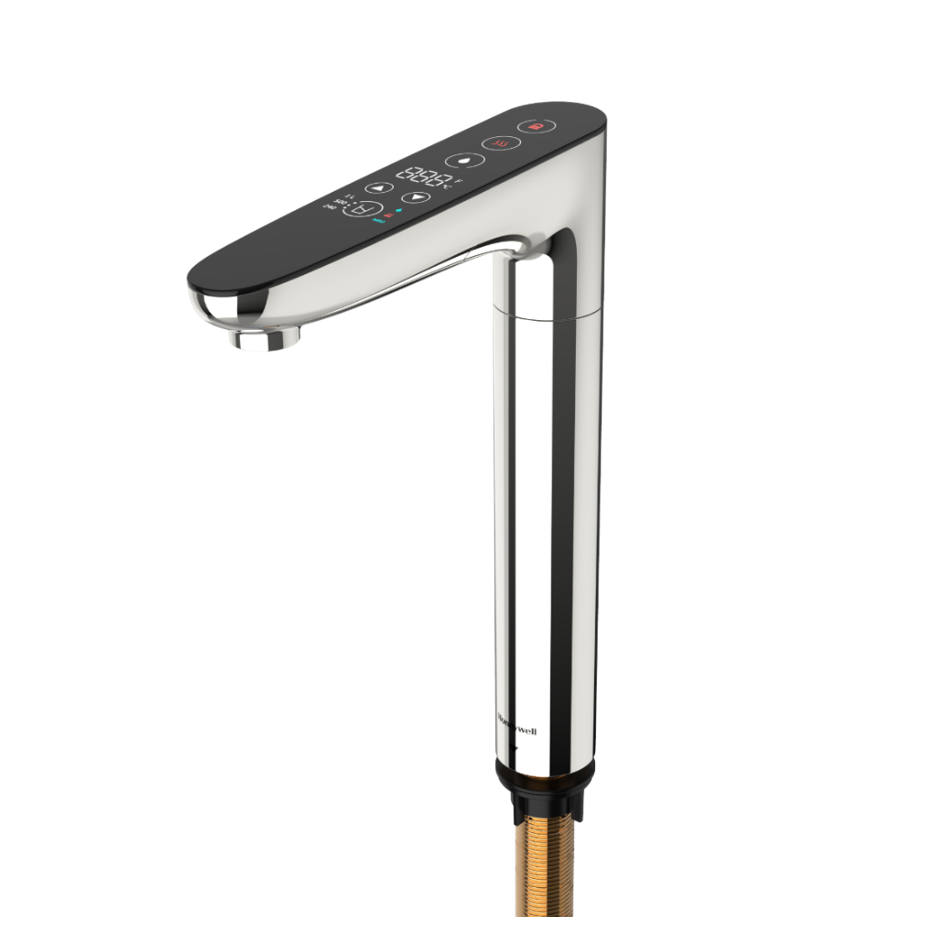
Some advanced models come equipped with additional smart features such as digital temperature displays and preset programs. These enhancements not only improve convenience but also sync with other smart kitchen appliances. By incorporating the latest technology, these faucets help create a high-tech, futuristic kitchen environment.
4. Improved Accessibility
Smart kitchen sink faucets enhance usability, making them suitable for people of all ages and abilities.
● User-Friendly for All Ages:
Whether for young children, the elderly, or individuals with disabilities, smart kitchen sink faucets provide a more accessible and convenient solution. Traditional faucets can be difficult to operate for some users, but hands-free functionality eliminates these challenges, ensuring a seamless experience for everyone in the household.
● Versatile Applications:
Smart kitchen sink faucets are highly adaptable to different kitchen tasks. Whether filling large pots, washing vegetables, or rinsing dishes, their touch-free operation caters to various needs. This flexibility is especially valuable in busy kitchens where efficiency is essential. By reducing the need for manual operation, these faucets enhance practicality and ease of use.
5. Water Efficiency
As sustainability becomes a key focus, smart kitchen sink faucets play a crucial role in water conservation.
● Automatic Activation:
One of the primary benefits of smart faucets is their ability to save water. The built-in sensors activate water flow only when needed, such as when a hand or object is detected. This prevents unnecessary water usage and promotes efficient consumption.
● Reduced Risk of Overflow:
Smart kitchen sink faucets help prevent accidental overflows. Forgetting to turn off a traditional faucet can lead to water waste and potential damage, but smart faucets automatically shut off once the hand or object is removed, eliminating this risk.


Our factory
Xiamen Smart Water Technology Co., Ltd is a manufacturer behind many of the top international under-sink drinking water system brands.
Professional team
We reinvest 10% of our sales revenue in R&D. We have 5 invention patents, 21 utility model patents, and 28 appearance patents. Our high-quality R&D team can efficiently design new products, analyze and improve existing products, and provide customers with the most cost-effective products.
Quality assurance
Our factories meet the highest quality requirements stipulated in ISO 9001, ISO 14000:14001 SGS guidelines, and our stringent quality control system, and also pass UL, CB, CE, ERP, WRAS, UKCA, RoHS, REACH, PAHS, and SCCP international standards.
OEM & ODM available
We can customize products according to the specific needs of customers. We can produce dispensers and faucets with different functions, shapes, sizes, and colors to meet the specific requirements of customers.
After-sales service
We offer two-year warranties on our products and provide ongoing support and maintenance services.
Types of Smart Kitchen Sink Faucets
Touchless Smart Faucets
Touchless smart faucets, also known as sensor-activated faucets, use motion sensors to detect when a hand is placed under the water spout. The sensor is typically located at the bottom of the faucet body but may also be discreetly positioned near the aerator to maintain a sleek, modern appearance.
Voice-Activated Smart Faucets
A voice-activated faucet is a hands-free device controlled by simple voice commands, such as "turn on the faucet." This technology is particularly beneficial for individuals with disabilities or those who have their hands full while cooking or cleaning. Some models allow users to adjust the water temperature or dispense a specific amount of water through voice commands, enhancing convenience and efficiency.
Filtered Smart Water Taps
A filtered smart water tap features a built-in water filtration system that purifies the water as it flows from the tap. These taps connect directly to the home's plumbing and contain a filter inside the spout. When the tap is turned on, water passes through the filter, providing clean and safe drinking water without the need for a separate filtration system or water pitcher.
Heated and Chilled Water Smart Taps
These smart taps include built-in hot and cold water dispensers, allowing users to access instantly heated or chilled water at the push of a button. They feature an integrated tank that maintains hot water at a set temperature and a chiller that ensures cold water is always available.
Hotels
Hotels use smart kitchen sink faucets to allow guests to easily adjust the temperature and water flow. They provide users with a better experience by allowing them to control the amount of water as they wish. In addition, they also save water by controlling the water flow.
Residential
Smart kitchen sink faucets are used in homes to bring convenience to users and help them complete tasks easily. They are customized according to user needs and have features such as voice control and motion detection. These features make everything from cooking to washing hands convenient.
Schools
Schools use smart kitchen sink faucets to provide students with hygienic water. Students can use the faucet without touching it, which helps prevent the spread of germs. When students use the faucet, the smart kitchen sink faucet controls the water flow, thus saving water.
Hospitals
Smart kitchen sink faucets in hospitals are used to help patients and medical staff get water without touching the faucet. This helps prevent the spread of infection. They are used in operating rooms and other sensitive areas with high hygiene requirements.
Public areas
Smart kitchen sink faucets are used in public places such as parks and stadiums to provide people with hygienic water. They are custom-made to conserve water and help cities reduce water bills. Faucets in public places are often vandal-resistant and provide a high level of hygiene.
Components of Smart Kitchen Sink Faucet
Sensor
As the most important component, the sensor detects the presence of your hand and sends a signal to the valve to open or close the faucet. Its role is to instruct the valve when to start or stop the water flow based on hand movement. The sensor is typically either an infrared light sensor or an ultrasonic sensor. In most cases, the infrared sensor is placed at the tip of the spout.
Solenoid Valve
The solenoid valve is controlled by a positive or negative signal from the sensor. The polarity of the signal determines whether the solenoid performs a pulling or pushing action. The valve operates using a rubber-like disc to regulate water flow. When no signal is present, the valve remains closed, preventing water from flowing. When a hand is detected, the sensor sends a positive signal to the solenoid valve, triggering it to pull open and allow water to flow. Once the hand is removed, the solenoid valve pushes the valve closed, stopping the water flow.
Power Supply
Every smart kitchen sink faucet requires a power source to function, though the type of power supply may vary. Some models operate on dry-cell batteries, while others use low-voltage current supplied by an AC transformer.
Spout
All internal components of the smart kitchen sink faucet are housed within the spout. Spouts are made from different materials, depending on the faucet's design and durability requirements.
Waterproof Connecting Wire
The waterproof connecting wire is a crucial component that links various sub-components together, acting as a bridge between the sensor, solenoid valve, and power source, whether it be batteries or a power adapter.
How to Choose a Smart Kitchen Sink Faucet
Material
The material is important for longevity. Common materials include stainless steel, brass, and chrome. Each material has its own advantages. Stainless steel is rust-resistant and durable. Brass has a classic, elegant look. Chrome is shiny and easy to clean. It has a modern feel.
Power supply
Smart kitchen sink faucets require a power source, usually AA batteries or an electrical connection. When choosing a faucet, it is best to consider the battery life. Faucets that often need to replace batteries can be a hassle. Choose a faucet that plugs into an outlet so that it can be used frequently without changing batteries. So look for a faucet with a long battery life or one that uses electricity for easy maintenance.
Sensor accuracy
For smart kitchen sink faucets, make sure the accuracy of the motion sensor. This prevents accidental water flow when waving your hand. Choose a sensor that matches the faucet's position. A good sensor can save water and is more convenient.
Water flow rate
Also pay attention to the water flow rate. Choose a faucet with an adjustable spray head. It allows you to control the water flow rate. It is measured in gallons per minute to avoid splashing and get the right amount of water.
Easy to install and use
Choose smart kitchen sink faucets that are easy to install and use. Some may require a plumber to install, especially those with complex sensors. Also, consider whether they will require professional help for future repairs. It is best to choose faucets that are simple to install and operate.
1. No water coming out of the faucet
If you can hear the valve clicking, but no water comes out, it means that there is something wrong with the diaphragm of the solenoid valve. You should try to clean it first, and if that doesn't work, you should replace it.
If there is no clicking sound, but you still can't get water, then you have any of the following possibilities:
a. The battery voltage is too low and you need to replace the sensor as it may cause a short circuit.
b. If the battery voltage is between 5.4-6.4 V, the battery is dead and you should also replace it. One thing you should remember is that the battery life of a sensor faucet is 2-5 years.
c. If you have a new battery or the voltage is above 6.2 V, you should test the tap on the test line.
2. Water does not keep flowing
If the water continues to flow despite closing the valve, or if there is a continuous leak, it means that dirt has entered the valve, causing the valve to not close completely.
To avoid this, you should install a one-way valve that does not allow backflow and a garbage filter that directly supplies water to the faucet.
3. The sensor has a flashing red light
As with many appliances, a flashing red light indicates a low or dead battery that needs to be replaced soon.
4. The battery is draining quickly
In this case, the sensor is likely faulty, causing excessive power consumption and draining the battery. Replacing the sensor can solve the problem.
Why Choose Xiamen Smart Water Technology Co., Ltd.?
- Global Manufacturer: Trusted supplier behind top international faucet brands.
- Advanced R&D: 10% revenue reinvested into innovation.
- Quality Certified: ISO9001, CE, UL, UKCA, WRAS, RoHS & more.
- OEM & ODM Services: Custom shapes, finishes, and functions.
- Excellent Support: 2-year warranty with fast after-sales service.


Our certificate


FAQ
Hot Tags: Smart kitchen faucet suppliers, sensor tap manufacturers, voice-control faucet OEM, water-saving faucet technology, commercial smart faucets, US/EU/AU bulk buyers, Moen Delta Grohe compatible, touchless kitchen taps, NSF-certified faucets, hotel kitchen upgrades, wholesale, Smart Kitchen Sink Faucet


