

How to choose the right kitchen faucet?
By Smart Water Tech Allen Huang 2024-10-29
Kitchen taps are the most frequently used products in the home. If you choose the wrong one, it will bring great inconvenience to your daily life. Today, I will show you some tips on how to choose kitchen taps.
Common styles of faucets
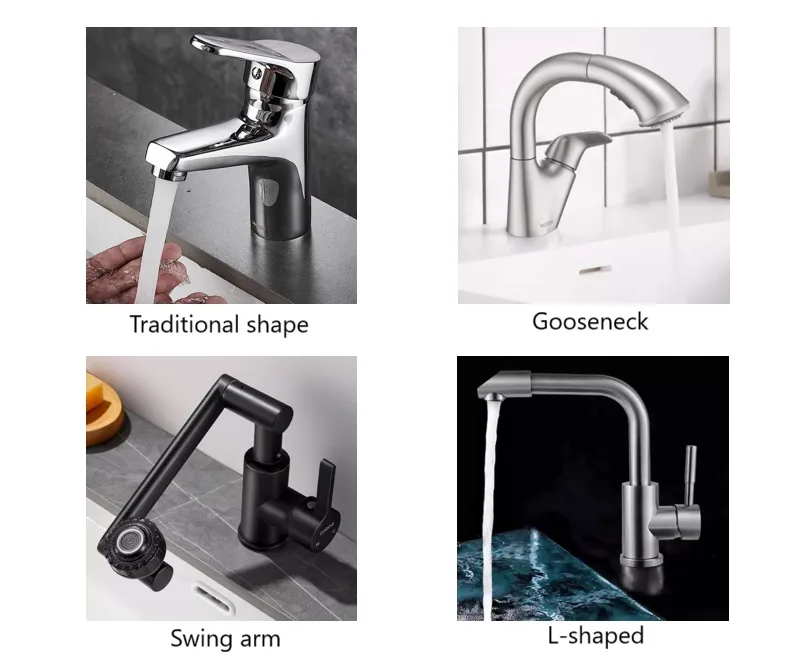
1. Basin faucet
Traditional shape: The main body adopts a square or cylindrical traditional shape with two water outlet modes, handle and button. This is the most common shape and can be matched with any style.
L-shaped: The overall shape is like the letter "L", the spout can rotate 360°, and can also be used as a kitchen faucet
Gooseneck: The shape is large in front and small in the back, suitable for modern or light luxury decoration styles
Swing arm: The spout can be adjusted up and down, and the water outlet mode can be switched. The shape is more L-shaped
2. Kitchen faucet
U-shaped: The shape is more like the letter "U", the most common kitchen faucet shape, suitable for various styles
L-shaped: The shape is more like the letter "L"
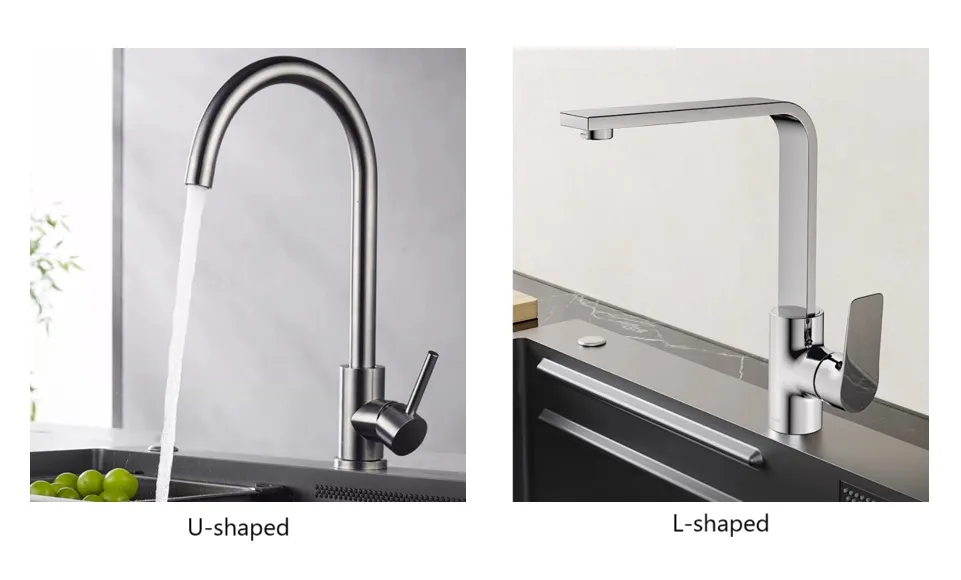
The swing arm model cannot be equipped with a pull-out faucet, but the rest are acceptable.
How to choose the size of kitchen faucets?
The height of basin faucets can be roughly divided into short, medium and high. The height selection is directly related to the installation position of the basin. It is recommended to determine the basin type first and then select the faucet.
Choose short/medium for under-counter basins and integrated basins, medium for mid-counter basins, and high for above-counter basins.
The height of the kitchen faucet is determined by the kitchen counter. Generally, it can be 20-30CM higher than the kitchen counter. If it is too high, the water will splash easily, and if it is too low, it will affect the water inlet hose.
What is the best material for a kitchen faucet?
Copper alloy, stainless steel or zinc alloy are commonly used in the market. In terms of corrosion resistance, stainless steel ≥ copper alloy > zinc alloy, and copper alloy is the most common.
1. Zinc alloy:
Low melting point, strong plasticity, easy to polish and process. The biggest disadvantage is that it is not resistant to corrosion in water and the faucet is not durable. It is not recommended!
2. 304 stainless steel
Acid-resistant, alkali-resistant, corrosion-resistant, lead-free, will not pollute tap water sources, and has a relatively low processing cost. Due to the relatively complex process, good stainless steel faucets are more expensive, have a single shape, and are generally brushed on the surface, which is matte and not as shiny as brass electroplated faucets.

3. Copper alloy
Copper alloy (brass) is currently recognized as the most suitable main material for home use. It is cheaper than high-quality 304 stainless steel, has a variety of appearance designs, and a delicate electroplated surface. Copper ions have a certain bactericidal effect. Generally speaking, the copper content suitable for making faucets is about 59%, the lead content is between 0.8% and 2%, and the content of other elements and impurities is about 2%. The remaining balance is zinc. The purpose of adding lead is to facilitate the cutting of brass. Water flowing into the faucet will precipitate lead and pollute the water source.

It is recommended to buy 304 stainless steel faucets for kitchen faucets, so there is no need to worry about lead pollution.
Kitchen faucet surface treatment process
There are many processes for faucet surface treatment, commonly used are silver plating, titanium plating, paint, porcelain, brushed, etc.
1. Silver electroplating
Electroplating is a process that uses the principle of electrolysis to plate a layer of metal or alloy on the metal surface to prevent rust and improve wear resistance.
The brass faucets we produce are mostly three-layer electroplated. That is, semi-bright nickel, bright nickel and chromium layers are plated on the refined copper body.
The nickel layer (including semi-bright nickel and bright nickel) plays a role in corrosion resistance. Since nickel itself is soft and dark in color, a layer of chromium will be plated on the nickel layer to harden the surface and increase the brightness.
A small number of merchants promote the use of "five-layer electroplating" and "six-layer electroplating" in an attempt to guide the electroplating process to be better with more plating layers, but the reality may be the opposite. "Five-layer and seven-layer electroplating" is often to make up for the defects in the substrate and manufacturing process. Due to poor substrate or poor process, it is solved by adding plating layers.
The national standard stipulates that the electroplating layer needs to be tested for acetic acid salt spray (AASS). The corrosion resistance must reach level 9 to be qualified. Our kitchen faucets can reach the highest level 10, so you can buy them with confidence.

2. Titanium plating
Electroplated titanium has the advantages of high strength, low density, excellent mechanical properties, toughness and corrosion resistance. The surface of the titanium-plated faucet is as smooth as a mirror and has a golden luster. The titanium plating process is complicated and it is very easy to absorb impurities during hot processing, so the yield rate is low and the cost is also high. It is suitable for retro, elegant and luxurious styles.

3. Paint
The surface of the paint faucet is smooth, shiny and has good anti-oxidation performance. Compared with other surface treatment methods, if the workmanship is not good, the paint may fall off and the durability is poor. Most of them are matte black and suitable for modern minimalist style.

4. Porcelain
First, the metal base is made of alloy, and then the surface is covered with low-melting porcelain powder, which is sintered and fused in a high-temperature vacuum porcelain furnace. Porcelain faucets have both the strength of metal and the beauty of ceramics. They have a smooth surface, strong wear resistance, will not deform, stable color, and are acid and alkali resistant. It is a test of the manufacturer's craftsmanship and the designer's artistic sense. The price is relatively high and it is suitable for modern styles.
5. Wire drawing
The most common treatment process for stainless steel faucets. This treatment method will make the surface of the faucet look rough, but it feels very delicate, showing a restrained beauty. Wire drawing mainly relies on mechanical friction, which can create several common textures on the surface of the faucet, such as straight lines, random lines, threads, ripples, spiral lines and intermittent lines, and can create matte, mirror, three-dimensional, relief, satin and other effects.
For ordinary stainless steel faucet products without texture drawing, the pre-treatment sanding belt should reach 400 mesh. For those with texture requirements, the sanding belt should reach 600 mesh.

Special reminder: if there is electroplating effect on the surface of stainless steel faucet products, if it is not a high-end product that has been specially electroplated for product beauty, it is possible that the cheaper 201 stainless steel is used as the base material. Because 201 stainless steel has poor corrosion resistance, it may rust if it is exposed to a humid environment for a long time, so electroplating is required to isolate water vapor from direct contact with the base material. Consumers should pay special attention to this when purchasing stainless steel faucets.
valve core types
The valve core is the core part that controls the opening and closing and water flow. The mainstream on the market is made of ceramic materials, which are wear-resistant and have a long service life. The valve core can be divided into ceramic valve core, stainless steel ball valve core, shaft roller valve core.
1. Ceramic valve core:
The most widely used faucet valve core on the market. High-quality ceramic valve cores are resistant to high and low temperatures, wear and corrosion, not easy to deform, not easy to leak water, and have a relatively long service life. However, ceramic valve cores have certain requirements for water quality, and poor water quality will affect their service life.
Valve core brand: The domestic market generally uses domestic valve cores such as Mindi, Wanhai, Hansen, and Hunter. First-line brand high-end products will use world-renowned valve core brands such as Spanish Circuit and Hungarian Keros. In addition, many well-known brands will use self-made valve cores, such as Grohe, Hansgrohe, and Moen.
The faucet with a high-quality valve core feels comfortable and smooth to open and close. It can still be operated smoothly and labor-savingly after more than 500,000 switching operations, and it can be used for a long time.
2. Stainless steel ball valve core:
It has low requirements for the use environment, is generally not corroded by impurities, and has a long service life. This type of valve core has relatively high requirements for its raw materials and is relatively expensive.
3. Axial roller valve core:
This valve core is integrated with the entire shaft valve, which is easy to repair and replace, and is wear-resistant and aging-resistant. However, the style of the axial roller valve core is relatively old and not suitable for current aesthetic requirements, so it is less used at present.

Faucet aerator
The aerator allows the flowing water and air to mix fully, allowing the water to flow gently, reducing the impact of the water flow, and preventing the water from splashing around in the basin. It can save water, filter impurities, and make the water flow soft. It is one of the standard parts of our kitchen faucets. Some models of aerators have a quick-release structure for easy daily cleaning.

Pull-out spout
The pull-out length is mostly between 20-60cm, and the pull-out spout can achieve cleaning without dead angles. It is especially suitable for double sinks to reduce inconvenience.
1. There are generally two ways to automatically reset the pull-out faucet: gravity ball contraction and spring contraction.
Gravity ball contraction takes up a lot of space under the kitchen, which is not convenient for installing water purifiers and garbage disposals, but the price is cheap.
Spring contraction does not take up space under the kitchen and is more suitable for kitchens with water purifiers and garbage disposals. The disadvantage is that the cleaning distance is relatively short, it is easy to break if stretched too hard, the automatic reset function may gradually weaken, and the price is expensive.
2. Pull-out tube material
Poor quality of pull-out tube can easily cause problems such as difficulty in resetting, thread slippage, and water leakage. Pull-out tubes are generally made of two materials: nylon fiber and metal hose. Nylon fiber pull-out tubes are more recommended.
Nylon pull-out tube: Pull-out tubes made of nylon fiber are wear-resistant, soft, and rigid, and have a longer service life.
Metal pull-out tube: Compared with nylon tubes, it feels better, but metal hoses are likely to come loose after long-term repeated pulling, and may also wear the electroplating layer on the metal surface.

water inlet hose
The hose connecting the angle valve and the faucet is a faucet accessory. Many people will ignore the quality of the hose. Poor-quality water inlet pipes are prone to bursting and flooding the house. The quality of the faucet water inlet hose is very important! The key to the quality of the hose lies in the material used and the production process.
1. Inner tube material: EPDM is recommended, followed by natural rubber, and then ordinary rubber. EPDM is currently recognized at home and abroad as the most suitable material for bathroom water inlet hoses, and is also widely used abroad. It can withstand high temperatures of 130 degrees, is non-toxic and odorless, and has a service life of up to 30 years.
Some first-line brands upgrade to TPE or TPV, which is better than EPDM, but the price is higher.
2. Outer tube material: SUS304 stainless steel wire braided hose has good strength and long life. High-quality faucets are basically equipped with 304 stainless steel wire as the outer tube material.
3. Check the nut material: copper and stainless steel are preferred. The thicker the nut wall, the better the strength.
4. Joint material and pressing process: The main reason for hose bursting is the joint problem. The strength of the joint depends on the strength of the sleeve and the core. The core material is preferably copper or stainless steel. The thicker the sleeve and the core, the better. If the processing and pressing process is not in place, the pressure resistance will be poor. Choose our products, the quality is guaranteed.

360-degree rotation spout
The basic configuration of the kitchen faucet is a classic combination with the pull-out spout, which plays a role in expanding the cleaning range. Of course, many bathroom faucets have also upgraded this function.

Multiple water outlet modes
It usually contains 2-3 modes to meet the needs of different scenarios.

Kitchen faucet recommendation

pull out kitchen faucet
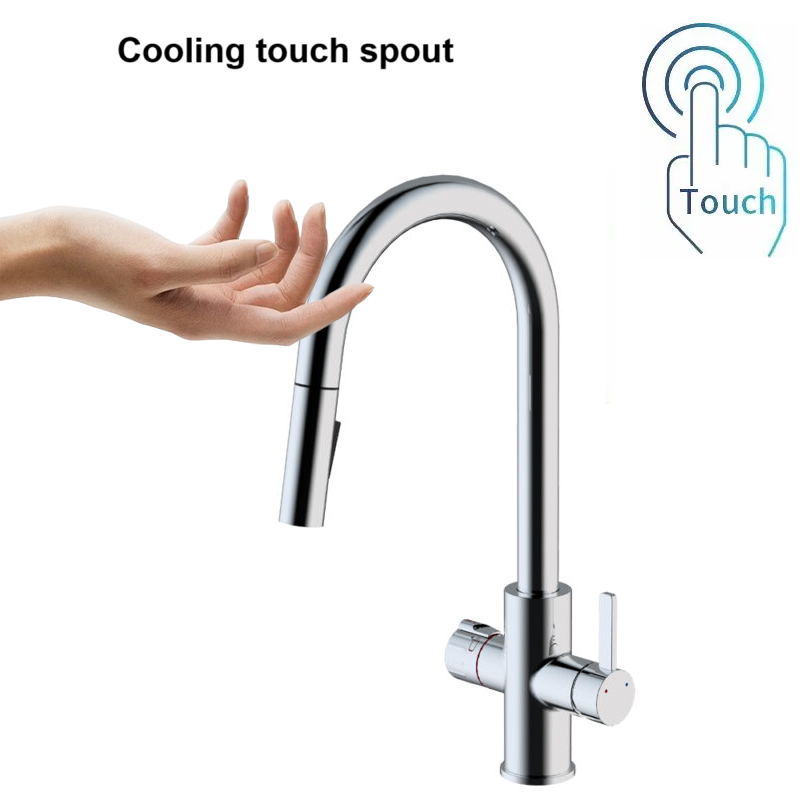
4 in 1 boiling water tap

hot water tap 4 in 1

kitchen tap 3 in 1

Sparkling Water Tap in Kitchen