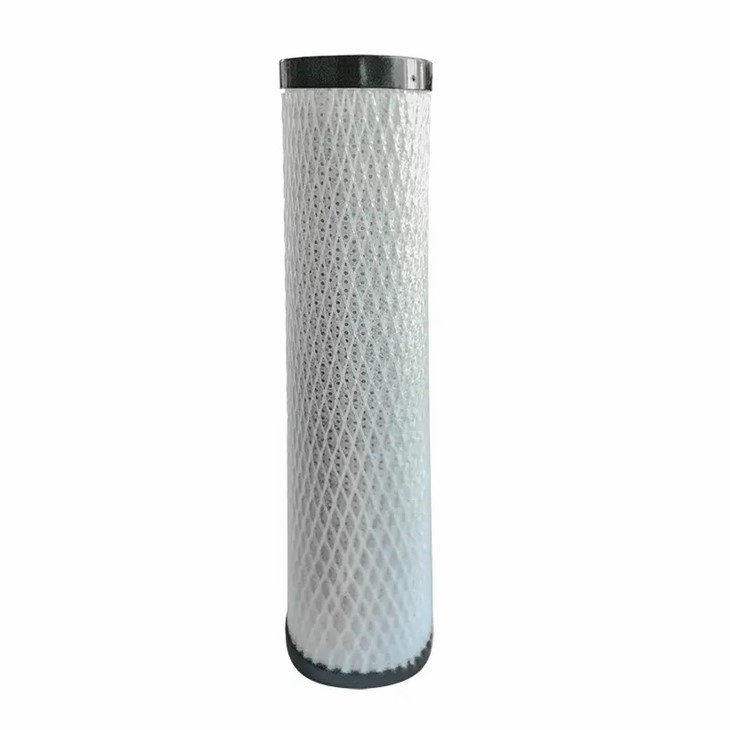
The Carbon Block Pre-Filter is a high-performance water filtration component engineered to boost the effectiveness of reverse osmosis (RO) systems. Constructed with premium coconut shell carbon, it removes up to 99.99% of chlorine, volatile organic compounds (VOCs), bad taste, and odors—delivering pure, fresh-tasting water every time.
1. Carbon Paper
2. Check Valve inside, no water drip
3. 100% laboratory vacuum heated, cleaned coconut husk carbon
4. All the materials meet the NSF &WRAS Approval
5. Filter cartridge must be changed every 6 months or 2000L
Send Inquiry
Download
Description
Technical Parameters
Product Description
The Carbon Block Pre-Filter is a highly efficient water treatment equipment, the core of which is to use the strong adsorption capacity of activated carbon to purify water. Secondly, the working principle of the carbon block pre-filter is mainly based on the physical adsorption and chemical adsorption of activated carbon. Physical adsorption refers to the intermolecular force between the surface and pores of activated carbon that can attract and fix impurity molecules in water. This adsorption is usually reversible. When the adsorption reaches saturation, its adsorption capacity can be restored by appropriate treatment (such as backwashing or replacing activated carbon).
Key Features
🌰 Premium Coconut Carbon Block:
100% lab-grade coconut shell carbon with high surface area for superior adsorption.
💧 Built-in Check Valve:
Prevents backflow and drips, extends filter life, and supports leak-free operation.
✅ NSF & WRAS Certified Materials:
Food-grade components meet global water safety standards.
🕒 Long-Lasting Performance:
Effective for up to 6 months or 2,000L (model-dependent), reducing maintenance costs.
How It Works
The filter combines physical and chemical adsorption to purify water:
Physical: Traps fine particles, sediment, and organics in its micropores.
Chemical: Neutralizes chlorine and VOCs for improved taste and health.
With a surface area of up to 1000 m²/g, it maintains high flow while efficiently removing harmful substances.
Technical Specifications
Filter Media: Coconut shell carbon block
Micron Rating: Typically 1–5 microns (model-specific)
Recommended Replacement: Every 6 months or 2,000L
Certifications: NSF, WRAS
Compatibility: Fits standard RO and under-sink water filter systems
Choosing the Right Filter
Opt for high chlorine removal ratings for best taste.
Verify certified food-grade materials for safety.
Consider twist-off or push-fit designs for easy DIY replacement (under 5 mins).
For extended use, choose models rated for 5,000L+.
Applications
Reverse Osmosis (RO) Systems
Under-Sink Water Filters
Multi-Stage Water Filtration Pre-Treatment
Residential & Commercial Water Purifiers
Why Choose Us?
As a trusted manufacturer, Xiamen Smart Water Technology Co., Ltd. delivers high-quality, customizable RO pre-filters designed for global markets. Our filters offer excellent performance, compatibility, and safety, ensuring clean, great-tasting water with every use.
FAQ - Carbon Block Filter
Q: What is a carbon block pre-filter?
A: A carbon block pre-filter is a water filtration component designed to reduce contaminants such as chlorine, sediment, and volatile organic compounds (VOCs). Made from compressed activated carbon, it effectively adsorbs impurities, improving water taste and quality. Typically installed before a reverse osmosis system or other filtration units, it helps protect downstream components by prolonging their lifespan.
Q: How does a carbon block pre-filter work?
A: The carbon block pre-filter works through a process called adsorption, where impurities in the water adhere to the surface of the activated carbon particles. As water flows through the densely packed carbon block, contaminants are trapped, while clean water continues through. This process significantly reduces the levels of chlorine, odors, and various chemicals, enhancing overall water quality.
Q: What contaminants can a carbon block pre-filter remove?
A: A carbon block pre-filter can effectively remove a variety of contaminants, including chlorine, sediment, and certain heavy metals. It also reduces unpleasant tastes and odors caused by organic compounds. While it excels at removing chemical impurities, it may not be as effective against microbial contaminants like bacteria or viruses, which might require additional filtration methods.
Q: What are the benefits of using a carbon block pre-filter?
A: The benefits of using a carbon block pre-filter include improved water taste and odor, extended lifespan of downstream filters, and reduced maintenance costs. By removing chlorine and other chemicals, it enhances the effectiveness of reverse osmosis systems and other filtration methods. Additionally, it can improve the overall healthiness of drinking water by lowering the presence of harmful substances.
Q: How often should I replace a carbon block pre-filter?
A: The replacement frequency for a carbon block pre-filter depends on factors like water quality, usage, and specific filter design. Generally, it's recommended to replace them every 6 to 12 months. Monitoring water taste, odor, and flow rate can also indicate when a filter needs changing. Regular maintenance is essential to ensure optimal filtration performance.
Q: Can a carbon block pre-filter remove fluoride?
A: While a carbon block pre-filter can reduce some levels of fluoride, it is generally not as effective as reverse osmosis systems or specialized fluoride filters. The effectiveness of fluoride removal varies based on the specific carbon block's composition and quality. If fluoride reduction is a priority, consider additional filtration methods designed specifically for that purpose.
Q: Are carbon block pre-filters environmentally friendly?
A: Carbon block pre-filters can be considered environmentally friendly, especially if made from sustainable materials like coconut shell carbon. They help reduce reliance on bottled water by providing cleaner tap water, which can lower plastic waste. Additionally, many manufacturers offer recycling programs for used filters, promoting a more sustainable approach to water filtration.
Q: How does the flow rate of water affect a carbon block pre-filter?
A: The flow rate of water can significantly impact the performance of a carbon block pre-filter. Higher flow rates may reduce contact time between the water and the carbon, potentially decreasing the filter's effectiveness in removing contaminants. It's essential to select a pre-filter that matches the water flow requirements of your system to ensure optimal filtration.
Q: Can I use a carbon block pre-filter for well water?
A: Yes, a carbon block pre-filter can be used for well water, but it's crucial to consider the specific contaminants present in the water. While it effectively removes chlorine and some organic compounds, well water may contain additional impurities like heavy metals or bacteria. Conducting water testing is recommended to determine if additional filtration methods are necessary.
Q: What maintenance is required for carbon block pre-filters?
A: Maintaining a carbon block pre-filter involves regular monitoring and timely replacement based on usage and water quality. It's advisable to check for any visible signs of wear or saturation, such as reduced flow rate or changes in water taste. Proper installation and avoiding exposure to extreme temperatures can also help prolong the filter's lifespan.
Q: How do I install a carbon block pre-filter?
A: Installing a carbon block pre-filter typically involves connecting it to the water line before the main filtration system. Begin by turning off the water supply, then follow the manufacturer's instructions for securing the filter in place. Ensure all connections are tight to prevent leaks. Once installed, turn the water supply back on and check for proper operation.
Q: What is the difference between carbon block and granular activated carbon filters?
A: The primary difference lies in their structure and filtration efficiency. Carbon block filters are made from compressed activated carbon, providing a larger surface area for adsorption and superior contaminant removal. In contrast, granular activated carbon (GAC) filters have larger particles and may have a lower adsorption capacity. This makes carbon block filters generally more effective for fine filtration.
Q: Are carbon block pre-filters effective against bacteria and viruses?
A: Carbon block pre-filters are not primarily designed to remove bacteria and viruses, as they excel at reducing chemical contaminants and impurities. While some carbon block filters may offer a degree of microbial reduction, they should not be relied upon as the sole method for pathogen removal. A multi-stage filtration system that includes UV sterilization or membrane filtration is recommended for comprehensive purification.
Q: What is the cost range for carbon block pre-filters?
A: The cost of carbon block pre-filters can vary widely depending on factors such as brand, quality, and filtration capacity. Typically, prices range from $15 to $50 for individual filters, while multi-packs may offer better value. Investing in higher-quality filters may yield better performance and longer lifespan, making it a cost-effective choice in the long run.
Q: Can I use a carbon block pre-filter with any water filtration system?
A: Most water filtration systems are compatible with carbon block pre-filters, but it's important to check compatibility with your specific model. Many systems are designed to accommodate pre-filters to enhance overall performance. Always consult the manufacturer's guidelines to ensure proper installation and functionality, as some systems may require specific types of filters.
Q: What is the shelf life of a carbon block pre-filter?
A: The shelf life of a carbon block pre-filter generally ranges from 2 to 5 years if stored properly in a cool, dry environment. However, once the filter is in use, its effective lifespan is much shorter, typically between 6 to 12 months. It's crucial to monitor usage and replace the filter according to the manufacturer's recommendations to maintain optimal performance.
Q: How do I know if my carbon block pre-filter is working effectively?
A: You can assess the effectiveness of a carbon block pre-filter by monitoring water taste, odor, and flow rate. A noticeable decline in these aspects may indicate that the filter is saturated and needs replacement. Additionally, some filtration systems may include indicators that signal when the filter requires changing, providing an easy way to ensure optimal performance.
Q: Do carbon block pre-filters remove chloramines?
A: Carbon block pre-filters can effectively reduce chloramines, but their efficiency may vary based on the filter's quality and design. Chloramines are more challenging to remove than chlorine alone, so it's essential to choose a high-quality carbon block filter specifically rated for chloramine removal. In some cases, additional filtration methods may be necessary for complete removal.
Q: Are there any disadvantages to using a carbon block pre-filter?
A: One potential disadvantage of carbon block pre-filters is that they may clog more quickly in areas with high sediment or particulate levels, necessitating more frequent replacements. Additionally, while they are effective at removing many chemical contaminants, they are not designed to filter out all types of impurities, particularly microbial pathogens. It's essential to use them as part of a comprehensive water treatment system.
Q: What should I look for when buying a carbon block pre-filter?
A: When purchasing a carbon block pre-filter, consider factors such as the material quality, certification standards (like NSF/ANSI), and the specific contaminants it can remove. Look for filters that have a high adsorption capacity and are compatible with your filtration system. Reviews and recommendations can provide insights into performance and reliability, helping you make an informed choice.
Hot Tags: carbon block pre-filter, RO pre-filter, coconut carbon water filter, chlorine removal filter, under sink water filter, high performance water filter, NSF certified carbon block, WRAS certified filter, sediment and odor filter, reverse osmosis filtration, Water Filter Cartridges, filters for water, water filter replacement