

What is the difference between PEX a and PEX b and PEX c?
[2025-08-17] | By Xiamen Smart Water Technology Co., Ltd. Allen Huang
Content Menu
3. Manufacturing Methods of PEX Pipes
4. Production Process and Additives
5. Comparison: PEX-A vs PEX-B vs PEX-C
6. Applications of PEX Pipes in Modern Plumbing and Kitchen Faucets
7. Conclusion: Choosing the Right PEX Pipe
PEX-A, PEX-B, and PEX-C: Industry Guide
The main differences between PEX-a, PEX-b, and PEX-c lie in their production methods and the resulting material properties.
- PEX-A offers the best flexibility and low- and high-temperature resistance.
- PEX-B is suitable for medium- and low-temperature environments and medium- and low-pressure environments and is relatively affordable.
- PEX-C offers the highest overall performance and long-term stability.
PEX, short for cross-linked polyethylene, is a durable, flexible, and heat-resistant piping material. It is made from high-density polyethylene (HDPE) that undergoes a cross-linking process, turning its molecular structure from a simple linear form into a strong three-dimensional network. This transformation enhances the pipe's resistance to heat, pressure, cracking, and chemical corrosion.
Due to its reliability, PEX pipes are widely used in plumbing, heating systems, and under-sink water solutions-making them essential for modern kitchens, hot water dispensers, and advanced faucet systems.
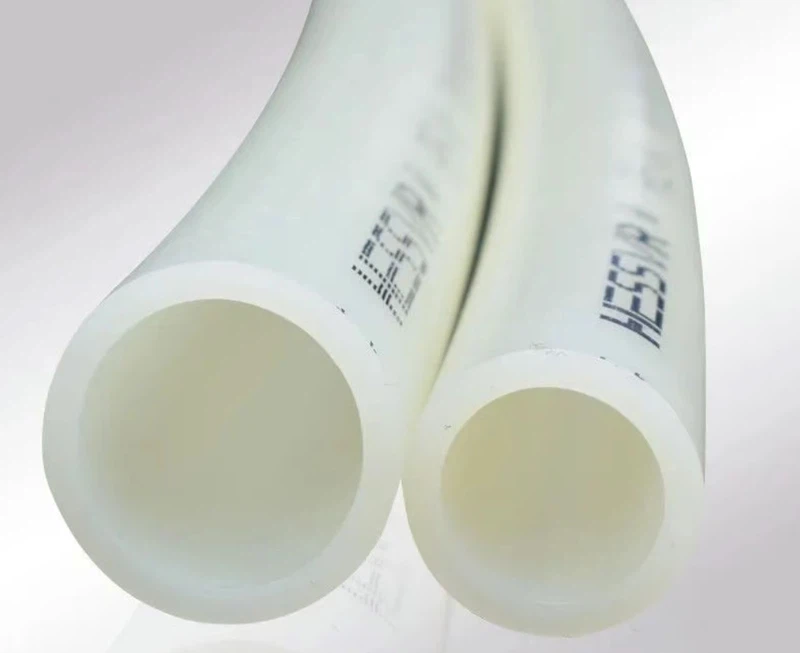
Manufacturing Method: Peroxide cross-linking (Engel method).
Key Features:
- Highly flexible, easy to install around tight corners.
- Excellent heat resistance and pressure tolerance.
- Uniform pipe wall thickness with superior durability.
Applications: Ideal for radiant floor heating, hot water distribution, and complex kitchen faucet connections where bending without fittings is an advantage.
Manufacturing Method: Silane cross-linking (Moisture cure method).
Key Features:
- Higher stiffness and strength compared to PEX-A.
- Cost-effective, widely available, and easy to install.
- Resistant to chlorine, making it suitable for municipal water supplies.
Applications: Commonly used in domestic plumbing systems, HVAC piping, and general hot/cold water supply in residential and commercial buildings.
Manufacturing Method: Electron beam irradiation (Radiation method).
Key Features:
- Excellent resistance to aging and chemical corrosion.
- Very stable structure with long service life.
- Smooth inner surface reduces scaling and clogging.
Applications: Suitable for hot and cold water systems, underfloor heating, and long-lasting water distribution where material stability is a priority.
- Engel Method (Peroxide Cross-Linking) → PEX-A
- Silane Method (Moisture Cross-Linking) → PEX-B
- Radiation Method (Gamma or Beta Irradiation) → PEX-C
Each method affects flexibility, strength, and cost, influencing the best use case for different water systems.
The main raw material for PEX pipes is HDPE, combined with initiators, cross-linking agents, catalysts, and stabilizers.
Steps in Manufacturing:
- Raw material preparation & additive mixing
- Melting and extrusion
- Pipe shaping and cooling
- Cross-linking treatment
- Inspection, packaging, and final product
Role of Additives:
- Cross-linking agents → Create three-dimensional molecular bonding.
- Antioxidants & UV stabilizers → Improve corrosion resistance, extend service life.
- Colorants → Provide identification and improve appearance.
| Feature | PEX-a (Engel Method) | PEX-b (Silane Method) | PEX-c (Electron Irradiation) |
|---|---|---|---|
| Cross-linking Process | Peroxide (Chemical) | Silane (Chemical) | Electron/Gamma Rays (Physical) |
| Molecular Structure | Primarily two-dimensional network | Three-dimensional network | Three-dimensional network |
| Typical Flexibility | High | Moderate | High (Soft) |
| Bend Memory | Has memory; tries to return to original shape | Has memory; tries to return to original shape | Has memory; tries to return to original shape |
| Connection Method | Metal compression or crimp fittings (Cannot be heat welded) | Metal compression or crimp fittings (Cannot be heat welded) | Metal compression or crimp fittings (Cannot be heat welded) |
| Flexibility | ★★★★★ | ★★★ | ★★ |
| Heat Resistance | ★★★★★ | ★★★★ | ★★★★ |
| Pressure Resistance | ★★★★ | ★★★★★ | ★★★★ |
| Cost | Higher | Moderate | Moderate |
| Best Use | Complex layouts, heating | General plumbing | Stable long-term systems |
| Long-term operating temperature | Up to 95°C | Up to 95°C | Up to 95°C (some can reach 110°C) |
| Short-term peak temperature | Up to 230°C (several minutes) | About 110°C | About 110°C |
| Low temperature resistance | Excellent (remains flexible down to -70°C) | Excellent (remains flexible down to -70°C) | Excellent (remains flexible down to -70°C) |
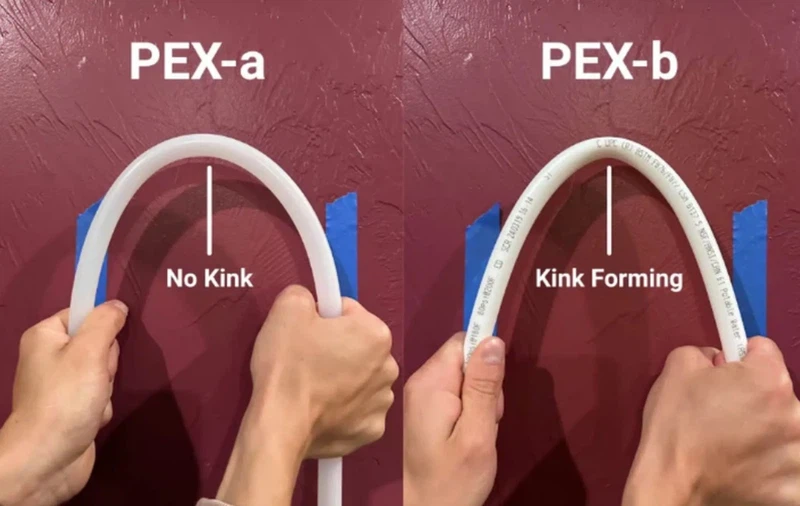
PEX pipes play a vital role in under-sink water systems, boiling water taps, chilled water taps, and instant hot water dispensers. Their durability ensures long-lasting performance in modern kitchens, hotels, and commercial projects.
- PEX-A: Perfect for premium hot water systems and luxury kitchen faucets requiring flexibility.
- PEX-B: Most cost-effective option for mass plumbing and standard water supply.
- PEX-C: Chosen for long-term stability in heating and cooling systems.
When selecting between PEX-A, PEX-B, and PEX-C, the decision should be based on application, budget, and long-term system requirements.
- For luxury kitchens and demanding hot water faucets, PEX-A is the best choice.
- For standard plumbing systems, PEX-B offers the best cost-performance ratio.
- For projects requiring maximum durability, PEX-C delivers excellent stability.
At Xiamen Smart Water Technology Co., Ltd., we design and manufacture modern kitchen faucets, under-sink water systems, and ODM solutions that integrate PEX piping for safe, efficient, and reliable water delivery.
Learn More About: EPDM vs. PEX Tubing: What's the Best Choice for Boiling Water Taps?
Learn More About: Why is CPVC Not Used Anymore