

PEX-a vs. PEX-b: What's the Difference?
[2025-09-16] | By Xiamen Smart Water Technology Co., Ltd. Allen Huang
Menu
- Introduction: PEX-a vs. PEX-b: What's the Difference
- What Are PEX-a and PEX-b?
- Cost Comparison
- Water Pressure & Flow Performance
- Flexibility & Installation
- Kink Resistance & Repair
- Freeze & Temperature Resistance
- Chemical Durability
- Comparison Table: PEX-a vs. PEX-b
- Which One Should You Choose?
- Partner With Us
- FAQ
When choosing piping materials for under-sink water systems, especially for sparkling water taps and premium drinking water dispensers, many international buyers ask the same question: What is the difference between PEX-a and PEX-b?
While both are made from cross-linked polyethylene, the manufacturing process and the performance they deliver can significantly impact cost, durability, and user experience. Let's dive into the details.

PEX-a and PEX-b are both types of cross-linked polyethylene (PEX) pipes. The difference lies in the cross-linking method:
- PEX-a: Cross-linked using the peroxide (Engel) method, achieving a high 85%–89% cross-link density.
- PEX-b: Cross-linked using the silane (moisture cure) method, with a lower 65%–70% density.
This difference in structure explains why PEX-a is more flexible, durable, and resistant to cracking, while PEX-b is more cost-effective but less adaptable in demanding applications.
Price often drives decision-making. Here's the difference:
- PEX-a (½ inch): ~$0.59 per foot
- PEX-b (½ inch): ~$0.36 per foot
That's roughly a 64% price increase for PEX-a. With larger sizes, the gap grows even more – at ¾ inch, PEX-a can cost over 130% more than PEX-b.
✔ Budget-focused projects often choose PEX-b.
✔ Long-term performance-driven projects – like sparkling water tap systems – tend to use PEX-a.
PEX-a supports expansion fittings, which maintain the full inner diameter of the pipe. This means:
- Higher water volume delivery
- Less pressure loss across fittings
- Better performance in multi-user households or commercial sparkling water tap systems
PEX-b, limited to insert fittings, restricts flow. Each fitting may reduce water pressure by around 5 psi – noticeable in systems that require consistent pressure for carbonated or filtered water delivery.

- PEX-a: Highly flexible, easy to bend around corners without extra fittings, minimizing leak risks and preserving flow.
- PEX-b: More rigid, requiring more fittings during installation, which increases both labor and the chance of leaks over time.
For ODM brands designing compact under-sink sparkling water dispensers, the space-saving flexibility of PEX-a is a clear advantage.
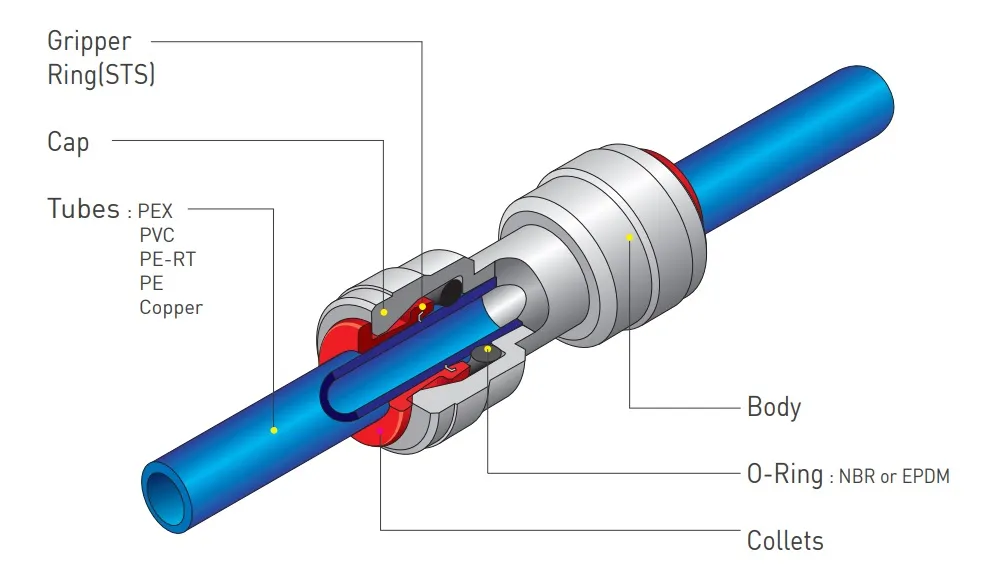
Accidents happen during installation:
- PEX-a: If kinked, it can be repaired with heat (and actually strengthens after repair).
- PEX-b: Must be cut and replaced with fittings, creating extra weak points in the system.

- PEX-a: Expands without cracking, then returns to shape once thawed. Suitable for colder climates.
- PEX-b: More prone to micro-cracking under freeze conditions, leading to potential leaks later.
PEX-a has higher resistance to chlorine, aggressive chemicals, and long-term stress cracking.
- PEX-a: Can withstand chlorine up to 5.0 ppm at 140°F for 50 years.
- PEX-b: Tolerates up to 4.0 ppm under the same conditions.
This makes PEX-a the better option for high-performance sparkling water tap systems where water purity and durability are critical.
| Feature | PEX-a | PEX-b |
|---|---|---|
| Cross-Linking Method | Peroxide (Engel method) | Silane (Moisture Cure) |
| Cross-Link Density | 85%–89% | 65%–70% |
| Flexibility | Highly flexible, easy to bend without fittings | More rigid, requires extra fittings |
| Repairability | Heat repairs kinks, stronger after repair | Must cut and replace with fittings |
| Water Flow & Pressure | Supports expansion fittings → higher flow | Insert fittings restrict flow, ~5 psi loss |
| Freeze Resistance | Expands without cracking, returns to shape | Prone to micro-cracks, risk of leaks |
| Chemical Resistance | Withstands up to 5.0 ppm chlorine at 140°F | Withstands up to 4.0 ppm chlorine at 140°F |
| Durability | 50-year lifespan at 180°F / 80 psi | 30–40 years under same conditions |
| Cost (½ inch) | ~$0.59 per foot | ~$0.36 per foot |
| Best For | Premium systems (sparkling water taps, hydronic heating, high-demand plumbing) | Budget-focused plumbing projects |
Choose PEX-a if you want superior flexibility, durability, chemical resistance, and reliable long-term performance for premium applications like sparkling water taps.
Choose PEX-b if you want a cost-effective solution for standard plumbing installations where budget matters more than long-term efficiency.
At Xiamen Smart Water Technology Co., Ltd., all our sparkling water tap systems and under-sink drinking water solutions are engineered with high-quality PEX piping sourced from trusted suppliers like DM.
👉 Looking for a reliable ODM manufacturer and wholesale partner for your brand?
Contact us today to discuss customized sparkling water tap solutions built with premium materials for global markets.
Q1: Why is PEX-a more expensive than PEX-b?
PEX-a is produced using the peroxide method, which creates a higher cross-link density. This makes it stronger, more flexible, and more durable - but also more costly to manufacture compared to PEX-b.
Q2: Which is better for sparkling water tap systems, PEX-a or PEX-b?
PEX-a is the preferred choice. Its flexibility, high-pressure capacity, and chemical resistance ensure reliable performance in under-sink sparkling water dispensers and other premium drinking water systems.
Q3: Can PEX-b be used with expansion fittings like PEX-a?
No. PEX-b cannot safely handle expansion fittings without risk of micro-cracking and leaks. It's designed for insert (cinch) fittings, which reduce flow compared to PEX-a.
Q4: How does temperature affect PEX-a vs. PEX-b?
Both are rated up to 180°F at 100 psi. However, PEX-a outperforms PEX-b in long-term testing - lasting up to 50 years under high-temperature use, while PEX-b typically lasts 30–40 years.
Q5: Is PEX-a worth the higher cost?
For premium applications like sparkling water tap systems, radiant heating, or areas with extreme temperatures, PEX-a is worth the investment. For general low-budget plumbing projects, PEX-b may be sufficient.
At Xiamen Smart Water Technology Co., Ltd., we engineer sparkling water tap systems, boiling and chilled taps, and advanced under-sink water solutions using premium PEX piping from trusted suppliers like DM. Our ODM services help international brands bring reliable, safe, and stylish drinking water systems to market.
👉 Partner with us for ODM sparkling water taps and wholesale opportunities.
Contact us today to request samples, catalogs, or a customized quotation.
Learn More About: PEX a PEX b PEX c
Learn More About: Why is CPVC Not Used Anymore
Learn More About: EPDM vs. PEX Tubing: What's the Best Choice for Boiling Water Taps?